
Sometimes an idea follows you for years before it tells you why. Mine came from metallurgy.
One lesson from my metallurgy days has stayed with me: the concept of an amalgam. Mercury introduced into certain metals doesn't simply become another ingredient. It creates something fundamentally different, useful, valuable, and volatile.
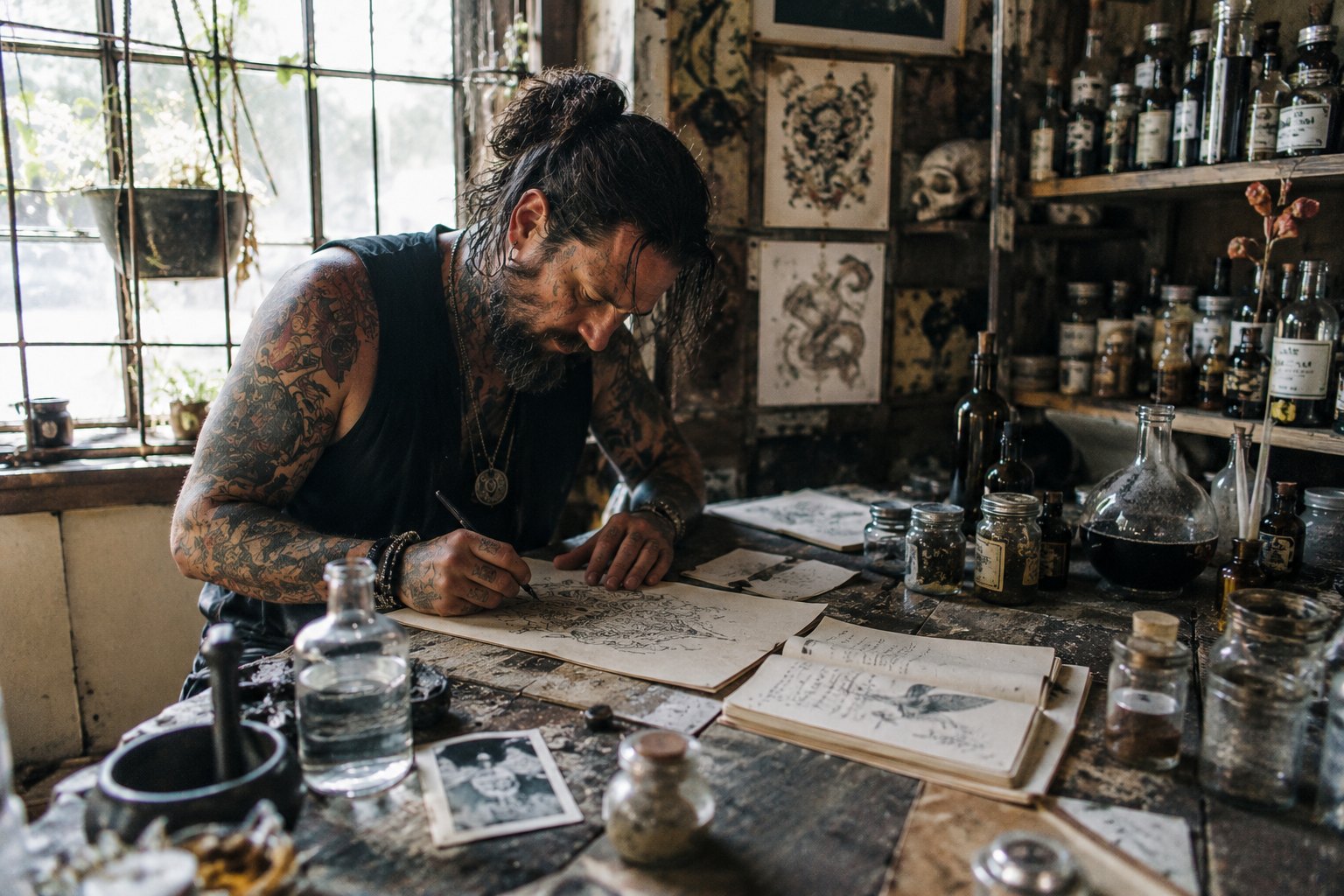
For years, I understood the science, but it wasn't until I immersed myself in tattoo culture that I began to understand the metaphor.
The deeper I've gone into this industry, the less convinced I've become that great tattooing is built solely on technical skills. Every artist begins with the same basic materials: an apprenticeship, long nights, self-doubt, failure, experience, and eventually confidence. Those are the common metals. But somewhere along the journey, another element enters the equation.
You can't measure it, find it in a machine, a bottle of ink, or a portfolio. Yet it's the very thing that separates artists who create beautiful tattoos from artists who leave permanent marks on an industry.
Like mercury, it's capable of creating something extraordinary, and also poisoning everything it touches. Maybe that's the paradox tattoo culture that has been trying to teach me all along.
By now you're probably thinking, I've finally started ingesting or inhaling mercury. Fair enough, but stay with me, because I don't think I've completely lost it.
The more I chased this idea, the more I realized I wasn't forcing a comparison. The parallels were already there, as mercury binds certain metals into an amalgam.
Tattoo culture binds artists together much the same way, not because they all tattoo alike, but because they've survived many of the same experiences: Apprenticeships, rejection, long nights wondering whether they chose the right career, convention weekends, and clients they'll never forget. Every artist arrives carrying a different story, yet those stories become the invisible bond that connects the culture long before anyone compares portfolios.
Mercury is rare and unusual: So is genuine artistic soul. Technical ability can be taught, repetition creates consistency, and experience builds confidence. But every once in a while, you meet someone who possesses something that refuses to fit inside a textbook or apprenticeship. Other artists recognize it immediately, and nobody can fully explain it, but everyone knows when they're standing in front of it.
Mercury is fluid: It refuses to stay where you want it, and creativity behaves the same way. The artists I've met rarely confine themselves to tattooing alone. They chase ideas that have nothing to do with needles because creativity has never respected the boxes people try to build around it. Tell a genuinely creative person where the boundaries are and they'll usually find a way to redraw the map.
Mercury has been valuable throughout history: Authenticity carries the same value inside tattoo culture. Long before algorithms rewarded attention and social media rewarded polished presentation, respect was earned one client at a time. The old guard understood something we're in danger of forgetting: image might attract attention, but authenticity is what earns lasting respect.
Mercury is toxic with prolonged exposure: So is every culture when its greatest strengths lose their balance. Tattooing has its share of ego, addiction, burnout, and self-destruction. None of those things begin as weaknesses. Most begin as admirable qualities pushed beyond healthy limits. The relentless pursuit of mastery slowly convinces someone that nothing they create will ever be good enough. The same fire capable of producing extraordinary artists can, if left unchecked, eventually consume them.
Mercury becomes dangerous when it's mishandled: Passion works exactly the same way. The goal isn't to eliminate it. Without passion there is no masterpiece, innovation, or culture worth preserving. The goal is to respect its power before it starts demanding payment with a pound of flesh, because history has shown us time and again that the brightest creative flames often burn the hottest.
That's when the metallurgy lesson finally revealed why it had followed me all these years. I wasn't thinking about mercury anymore, I was thinking about tattoo culture.
And that's also why I believe Inker has an opportunity that goes far beyond helping someone find a tattoo artist. Every profile represents a completely different amalgam of experiences, failures, discipline, and resilience that no portfolio could ever fully capture. The artwork may introduce you to an artist, but understanding the human being behind the work is where the real connection begins. In the end, people aren't just choosing a tattoo. Whether they realize it or not, they're choosing the amalgam they'll trust to leave a permanent mark on their own story.