
The Convention Opens Long Before the Doors Do
Why Convention Momentum Starts Before Opening Day
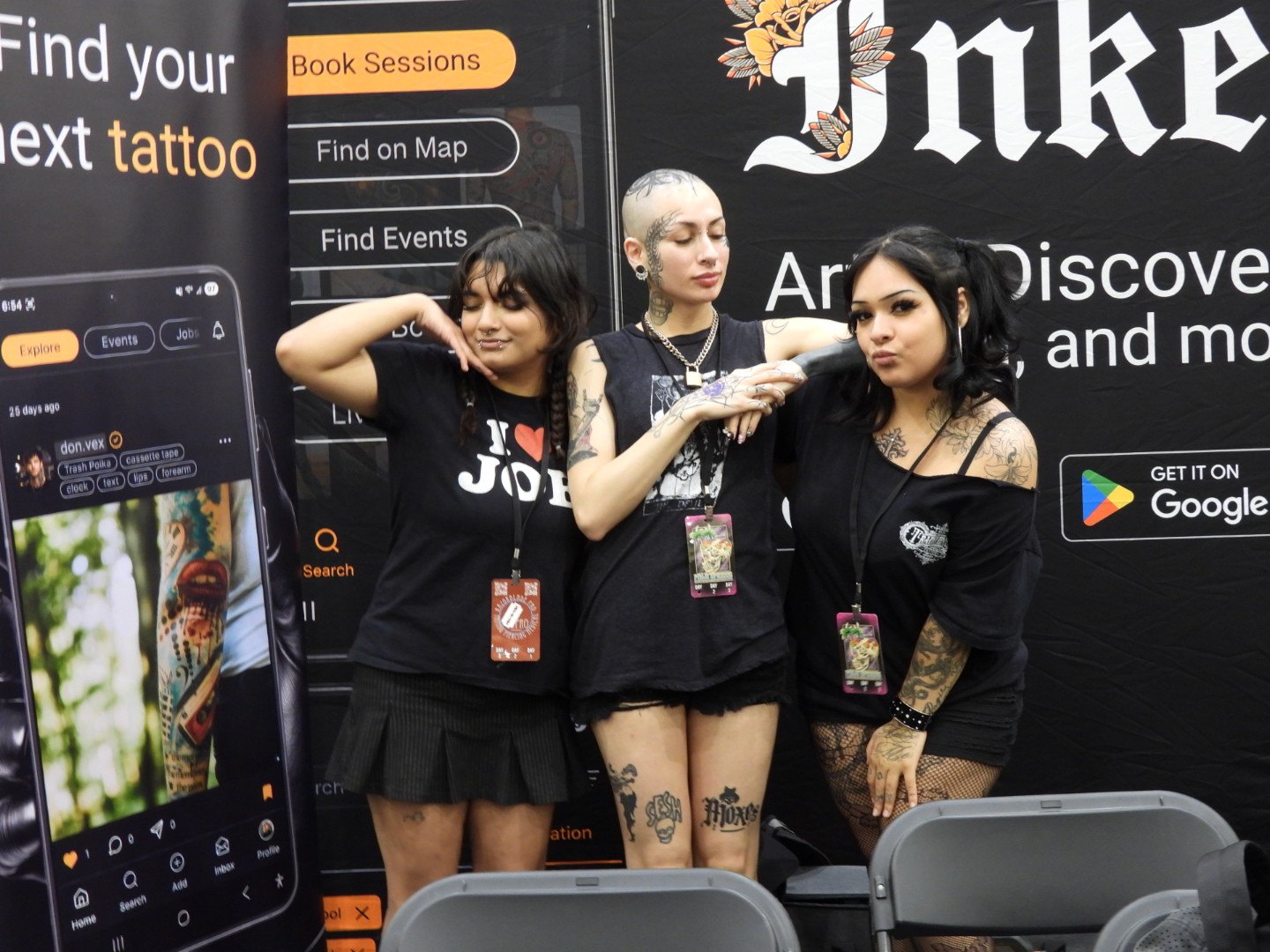
I took this photograph before the convention officially opened. Three vendors happened to be walking past the Inker booth, so I introduced myself, asked if they'd mind posing for a quick photo, and spent a few minutes talking with them before they continued making their rounds. At the time it felt like another ordinary interaction on another convention morning, but looking back, that photograph accidentally captured something I've been trying to understand ever since I started traveling the convention circuit. The story isn't really about the three people standing in front of our booth. It's about what they represent.
One of the assumptions I carried into my first conventions was that pre-booking existed primarily to guarantee income before the weekend began. On the surface that explanation makes perfect sense, but the more artists I spoke with, the less convinced I became that money was driving the strategy. They talked about announcing appearances weeks in advance, releasing convention-only flash, posting available time slots across social media, and occasionally offering incentives that encouraged people to commit before the show even opened. The financial benefit was obvious, but almost every conversation eventually drifted toward something much more valuable than the appointment itself, and that's momentum.
An active booth changes the psychology of an entire aisle in ways that are difficult to appreciate until you've stood there and watched it happen over and over again. People naturally gravitate toward activity because activity suggests confidence, demand, and trust. A client already sitting in the chair quietly tells every passerby that somebody was willing to commit before they were, and that single decision often creates a ripple effect throughout the day as curious attendees slow down, stop to watch the tattoo unfold, strike up conversations with the artist, remember the booth number, and circle back later after making their way around the convention floor. The tattoo being created isn't simply a tattoo anymore. It's become a live demonstration of credibility, and no paid advertisement inside the building carries the same weight.
Nobody ever described this to me as a secret, and I don't think they'd want it called one. I see it more as a lesson earned through experience, refined over years of traveling from city to city by artists who understand that success at a convention rarely begins when the doors open. More often than not, it begins weeks earlier with a social media post, a conversation, a returning client, and enough momentum to make sure that first chair never stays empty for very long.
That observation stayed with me and exposed something I had completely misunderstood. Like most people, I assumed those pre-booked appointments existed for one reason. Money. Of course artists want financial security. Who doesn't? That's where my thinking stopped, and that's probably where most people's thinking stops too. Then enough conversations with artists started pulling that assumption apart until I finally admitted I'd been staring at the symptom instead of the cause.
This is where my brain did what it always seems to do. It wandered into a place that had absolutely nothing to do with tattooing. Somewhere between driving home from another convention and replaying the weekend in my head, I found myself thinking about the Druids. Don't panic, I'm not about to turn this into a history lesson, and historians still argue over what the Druids actually practiced anyway, so don't hold me to the archaeology. I'm talking about symbolism. The image that refused to leave me alone was the ancient idea of making an offering before asking for prosperity. Maybe I'm channeling some distant relative, I've officially lost my mind. Either way, every time I replay a convention in my head, I keep coming back to that first appointment sitting in the chair literally minutes after the doors opened. It doesn't feel like a transaction anymore. It feels like an offering. Not to the artist, but to the room.
That sounds ridiculous until you've stood on enough convention floors and watched the same sequence play out repeatedly. The doors open, crowd wanders in without much urgency. Then somewhere across the aisle a machine starts running. People don't sprint toward it. They drift, almost subconsciously. One person stops, then another, then somebody leans over to get a better look. A friend gets pulled over, a conversation starts, somebody takes a photograph, and an hour later, “Bada Bing”, another appointment is booked.
Nobody announces what's happening, but everybody participates in it. Human beings have always borrowed confidence from other human beings. We eat at busy restaurants, and assume the long line must be worth standing in. We trust what other people have already trusted. Tattoo conventions simply expose that instinct in its purest form.
That's why I don't believe those veteran artists are really pre-booking appointments. I think they're pre-booking momentum. There's a difference.
The money is spent once. Momentum keeps paying dividends all weekend. That first client quietly tells every person walking past that someone else already solved the hardest question in the room. Can I trust this artist? Once another human being answers that question for us, our own hesitation begins to disappear. That's not manipulation. That's human nature, and the artists who've spent years living on the convention circuit seem to understand it instinctively. They aren't gaming the system. They're respecting it.
Covering conventions for Inker quietly dismantles assumptions I walked in with. I originally thought I was driving from city to city documenting tattoo artists, and in my travels, I realized I was documenting something much bigger. I was watching an entire culture teach, preserve and continually reinvent itself without ever writing down the rules. It happens while booths are still being assembled, over bad coffee before sunrise, in conversations between artists who haven't seen each other since the last convention, and in the five-minute exchanges that most attendees will never witness because they're focused on the finished tattoos instead of the people creating them. Those conversations rarely make it onto social media, yet they often carry decades of experience compressed into a few unforgettable minutes. That's where the heartbeat of this industry lives.
The more conventions I attend, the more convinced I become that Inker has an opportunity unlike any platform that's come before it. Showcasing great tattoos will always matter, but tattoos are only one chapter of a much larger story. Every artist carries a lifetime of lessons, philosophies, failures, victories, business instincts, and hard-earned wisdom that shaped the hands holding the machine. Capturing that knowledge doesn't just help clients discover artists. It strengthens the tattoo industry itself by preserving experiences that would otherwise disappear with time.
Everybody claims they're connected to tattoo culture, says it supports artists, and every company has figured out how to sprinkle words like community, passion, and authenticity across a website because they know those words sound good. The problem is that tattoo culture has never been built by words. It's been built by showing up, and there isn't a substitute for that. You can't understand this industry sitting behind a desk refreshing Instagram feeds and calling it research. You understand it by putting miles on the odometer, dragging camera gear through convention halls before sunrise, standing shoulder to shoulder with artists while they're still setting up their booths, drinking the same shitty coffee, eating the same overpriced convention food, using the same damn urinals, and staying long after the crowds disappear because that's usually when people stop performing and start talking. That's where the industry finally lets its guard down, and that's where the conversations worth documenting almost always begin.
Those stories aren't borrowed from somebody else's social media post, rewritten from a press release, or pulled from an interview conducted over email. They're earned. They come from standing in the same aisles, making the same trips, sharing enough time together so that people eventually stop giving you the polished version of their lives and start giving you the real one. After enough conventions, late nights, miles, and conversations, something interesting begins to happen. Individual interviews stop sounding like isolated opinions and start revealing patterns that are almost impossible to see unless you're living alongside the very people you're writing about. That's the difference between reporting on an industry and becoming immersed in its culture. One observes from a distance. The other earns the right to recognize truths that can't be seen from the outside looking in.
Inker is positioned to become something far more important than another place to discover tattoo artists. Discovery isn't just finding the artist with the style you like. Discovery is understanding why that artist thinks differently, approaching the craft the way they do, why certain unwritten rules exist, how careers are built, and what the next generation can learn from the generation that came before it.
Inker WILL keep showing up where tattooing lives, and that's in the conventions, the shops, and in the conversations that happen when nobody thinks they're being interviewed. We won't just help people discover artists, we'll help preserve the culture that made those artists possible.