
Your Tattoo Artist Works From Home Now. So What?
Why Trust in the Artist Is Not the Same as Trust in the Room
Your tattoo artist left the shop after getting into it with the owner and depending on which version of the story you heard, the owner was greedy, the artist was getting screwed, personalities finally collided or everybody involved had been sick of each other for months.
You don't really care about any of that anyway, since this artist has tattooed you before, you like the work, you trust them around your skin and now they're working from home with the added bonus of charging less without a shop taking part of the money.
Sounds like you scored, although I'd be curious about what disappeared from the price. That question has very little to do with whether the artist can tattoo, which is where familiarity can screw with the calculation.
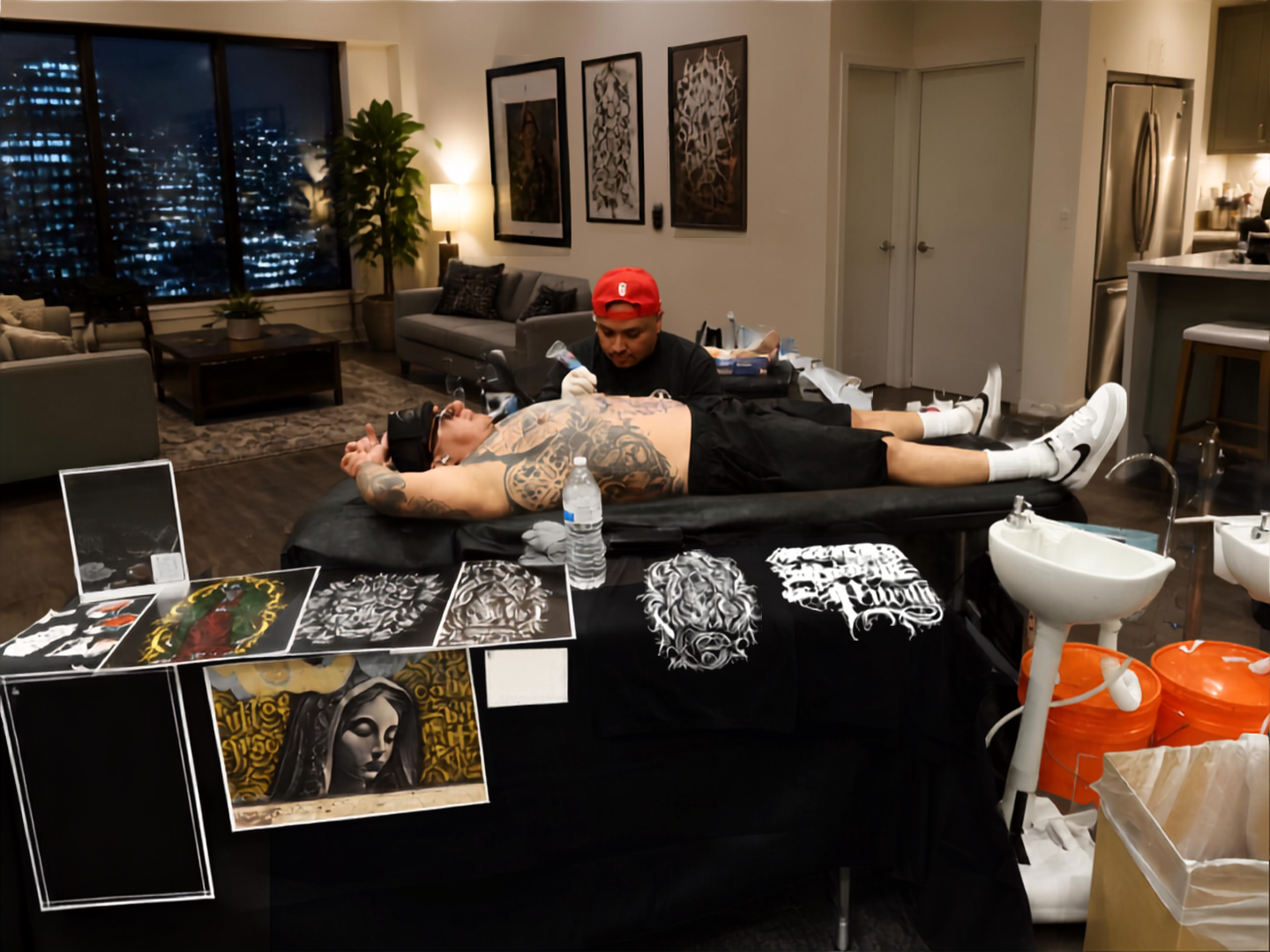
You met this person inside a legitimate shop, watched them work, healed their tattoo on your body and went back for more, giving you perfectly reasonable evidence that this artist can produce work you like. What none of that proves is that every protection surrounding those tattoos belonged exclusively to the person holding the machine. In California, body-art practitioners operate under registration and bloodborne-pathogen requirements, and body-art facilities are separately subject to health and sanitation requirements enforced locally, meaning the room around the artist has a regulatory existence of its own even if customers rarely give it much consideration.
A tattoo shop can become almost invisible once you trust the person working inside it. Customers remember the artist who drew the piece, positioned it, tattooed it and sent them home with aftercare instructions, but nobody leaves bragging about washable surfaces, sanitation procedures, waste handling or the regulatory requirements attached to the facility.
None of that makes for a particularly interesting tattoo story, yet all of it was sitting behind the experience the customer later remembers as proof that they trust their artist. Move the same artist into an unpermitted room at home and the talent can make the trip without automatically bringing the environment that surrounded it.
The artist may be every bit as talented at that new address, and pretending otherwise would make this argument ridiculous. They may also be obsessive about cleanliness, own excellent equipment and take infection control seriously, but those qualities don't answer whether the practitioner is properly registered where required or whether the location is permitted and operating under the health requirements applicable to tattooing there. A residence by itself doesn't answer the question either, since local requirements can differ and a properly authorized operation shouldn't be thrown into the same bucket as an unpermitted setup merely for sharing an address with a refrigerator and a couch.
I'm talking about the version where the artist left the legitimate shop, started tattooing from an unpermitted setup and brought the customer relationship along for the ride.
The price usually gets better right around there, which can make the arrangement feel like you've eliminated the middleman and kept everything that mattered. Same artist, same hands, same style and less money leaving your pocket sounds pretty good until you remember what the transaction actually involves. Tattooing deliberately breaches skin, creates exposure to blood and places pigment into tissue, which is precisely why bloodborne-pathogen training, sanitation standards and facility requirements exist independently of anybody's artistic ability. The finished tattoo can look every bit as good regardless of whether those protections were present, and that's part of what makes the gamble easy to ignore.
Loyalty can make that gamble even harder to see. Knowing an artist personally can tell you quite a bit about their character, and having been tattooed by them can tell you plenty about their work, but neither tells you whether the place you're sitting in today meets the requirements that applied to the place where they tattooed you last year. Familiarity has a way of connecting those two environments in our heads even when very different conditions may exist around the same pair of hands, and the trust earned by the artist starts getting extended to the room, the procedures and everything else without any of those things having earned it.
We do versions of this all the time. Trust in the person becomes shorthand for trust in whatever surrounds the person, and most days we get away with it without giving the process much attention. Tattooing gives that habit a rather unforgiving place to operate, since the transaction isn't happening across a counter or ending with something you can return when it goes wrong; it's happening through the protective barrier of your body.
Inker fits into this from a place that rarely gets much attention when people talk about finding tattoo artists. A portfolio can tell you whether you love an artist's work, photographs can show you their style and experience can help establish whether they're capable of producing what you're looking for, but discovery shouldn't end with finding beautiful work attached to a social-media account. Inker works with properly credentialed tattoo artists operating through legitimate shops or the established convention circuit, putting a degree of separation between discovering an artist and having to figure out whether the person behind an impressive portfolio should be tattooing you in the location they're offering.
That doesn't relieve customers of using their own judgment, nor does working inside a shop magically guarantee that every decision made under its roof will be perfect. It also doesn't make every artist working from a residence dirty, incompetent or dangerous, and a properly authorized home-based operation where local rules allow one shouldn't be confused with the unpermitted setup I'm talking about here. The address isn't what concerns me; removing the safeguards and oversight attached to an invasive procedure does.
The part I would have trouble getting past is the price, since that's usually where this arrangement becomes attractive in the first place. Your artist was charging one amount at the shop and can suddenly tattoo you for considerably less at the house, which feels like you discovered where all that extra money had been going. Maybe you saved a hundred, or even two hundred bucks, and for the first few minutes that number probably feels pretty good sitting in your pocket.
The artist is familiar, you've already healed their work before and the tattoo you came for costs less than it did under the old arrangement, so from your side of the transaction almost everything appears to have improved.
Except the address changed, and with it came a question nobody should be embarrassed to ask: is the place where you're about to get tattooed actually permitted for what is about to happen there, and is the artist properly registered under the requirements that apply where you live?
The answer matters independently of how clean the room looks, how long you've known the artist or how many tattoos of theirs you're already wearing, since none of those things can tell you what disappeared when the shop did.
I keep coming back to the couple hundred bucks in this scenario, mostly for how ordinary the amount becomes once you remove the tattoo from the conversation. A couple of dinners can eat through it, a trip to the grocery store can make a respectable dent in it, and anybody who has filled a gas tank lately knows how quickly money loses its swagger. Put that same couple hundred dollars beside a procedure involving repeated punctures through your skin and exposure to blood and calling it a bargain starts requiring considerably more enthusiasm than I can manufacture.
There are plenty of places in life where finding the cheaper guy makes perfect sense, and I have no problem hunting for a deal when the consequences of being wrong can be replaced, returned or thrown in the trash. My skin doesn't belong in that category, and if I'm going to carry the tattoo, I don't need to carry the gamble that came with saving a couple hundred bucks on it.