
THE STORY THAT’S DYING IN PUBLIC
Shelley Jackson, 2,095 Human Pages, and a Literary Experiment That Got Completely Out of Hand
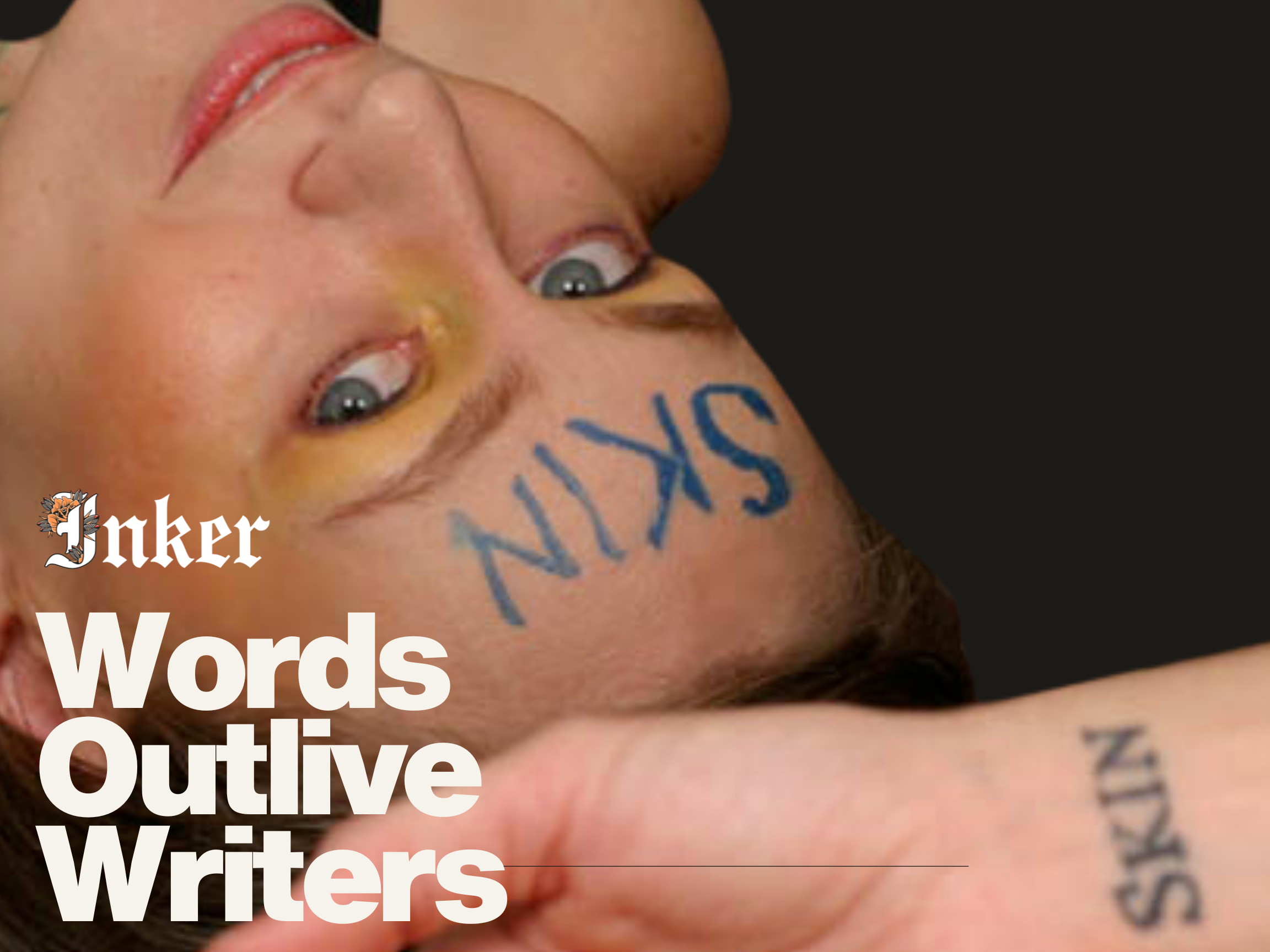
On a woman’s elbow, was a tattoo that read: cuticles. And ending with a comma. That’s it. Cuticles and a fucking comma. No boyfriend’s name, no inspirational message, or elaborate explanation of how she’d survived some fucked up relationship. Nope, just a word that sounded like it belonged on a manicure appointment reminder. The woman was part of an experiment dreamed up by a writer named Shelley Jackson, who one day decided that publishing a story on paper was too normal. She wanted people to get the words tattooed on their bodies, and she was looking for 2,095 volunteers willing to become individual pieces of her manuscript. As far as strange literary arrangements go, this one deserves to be in the Library of Congress.
The woman with the comma was encountered by Helen Zaltzman, who later interviewed Jackson for her podcast The Allusionist. I’m thinking about what happens when you meet a person with a tattoo like that. You ask what it means, right?! And you’re expecting some explanation involving an ex-boyfriend, a fling with an Uber driver, or an inside joke that’s not nearly as funny as the owner thinks it is. Instead, you get a story about being part of an unpublished work of fiction distributed across thousands of human bodies. I’d be like, am I talking to an interesting person or a member of another elaborate cult, AGAIN?! Yeah, I’m a magnet for those fuckers!!!
Jackson launched Skin in 2003, inviting volunteers to receive one word from a 2,095-word story she’d written. Nobody got to choose a favorite passage, request a specific word, or negotiate for a better position in the manuscript. You applied, Jackson accepted you, and she assigned the next available word in the story. You had to get it tattooed according to her instructions, send photographic proof, and agree not to reveal the complete text if you received a copy. You also had to sign paperwork acknowledging the potential consequences of getting tattooed.
I dig the writing concept, but not sure I’d enjoy surrendering control of my tattoo selection to another writer. You might be expecting something profound like eternity or desire and open the envelope to discover you’ve been assigned the. Congratulations, you’re a definite article. There’s another fucker out there with “of,” and if the two of you ever get together, you might be able to assemble the world’s least interesting sentence fragment. Jackson actually discussed getting all her “the” participants together to compete against the “of” crowd.
The participants aren’t called readers. Jackson calls them “Words.” She considers each person the embodiment of the word assigned to them, rather than a person carrying a copy of it. I can picture introducing one of these people at a party. “This is my friend Steve. He’s an accountant, recently divorced, and apparently the word “however” in a story nobody’s allowed to read.” It would take me about three drinks before I started asking Steve what the fuck happens if he changes his name!
The rules get stranger when death enters the picture. According to Jackson’s original arrangement, a tattoo can be removed, covered, damaged, or lost along with the body part it’s attached to, and the word continues to exist as part of the story. The participant still embodies it. But when that person dies, the word dies with them. Jackson deliberately designed “Skin” to lose its contents as the people wearing them pass away.
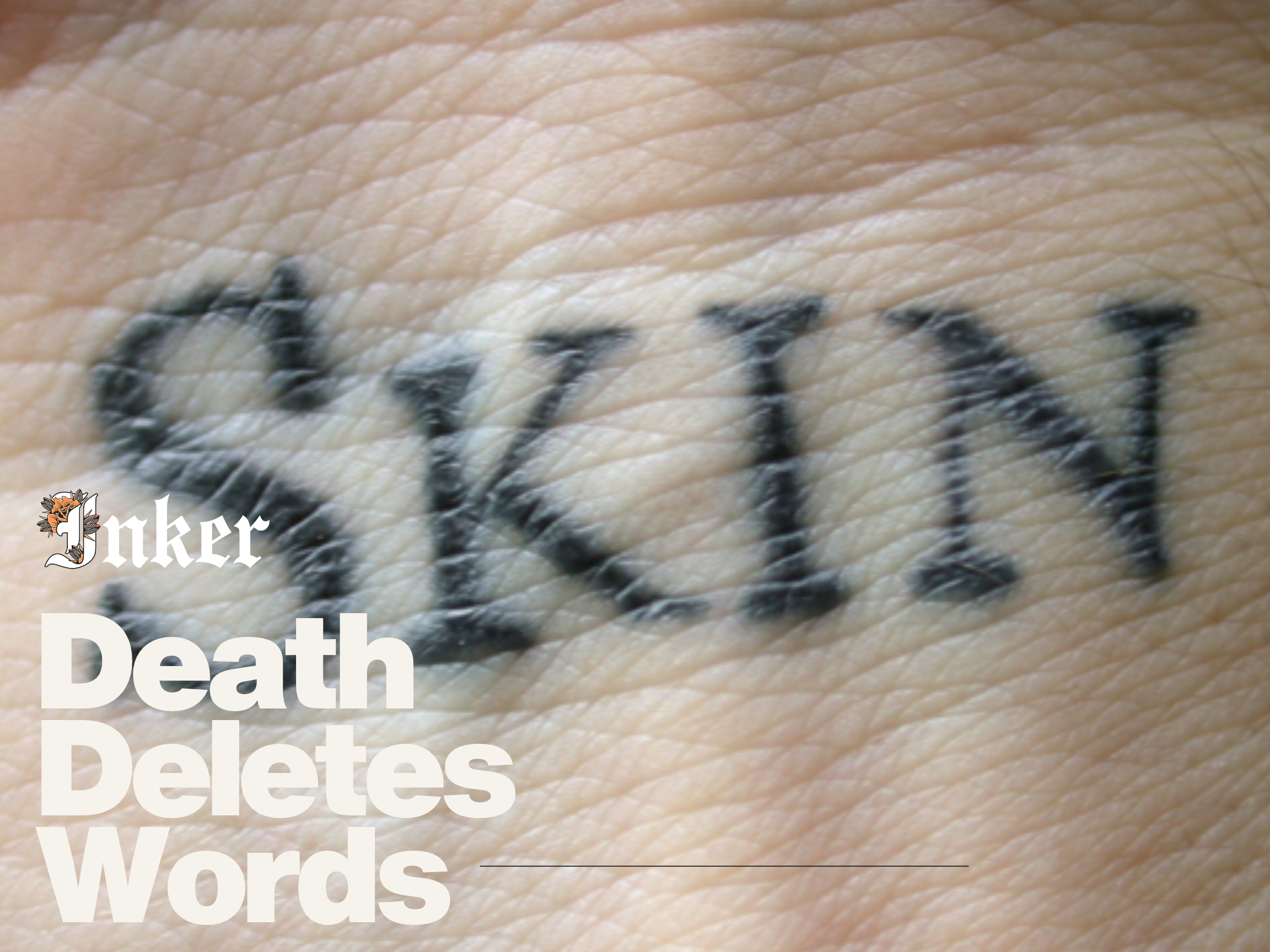
I have to give this writer kudos. She spent considerable effort writing something with a built-in demolition schedule. How fucking cool is that?!
Writers ordinarily want their work to survive, right?! We save files, make backups, revise manuscripts, and get irritated when our computers decide to play Houdini with a file. Jackson took a completely different approach. She wanted a story that could grow old, become damaged, and disappear along with its participants. The manuscript exists, but the original tattooed work is governed by the lives of the people carrying it. A guy could spend twenty years being the word “beautiful,” live a perfectly respectable life, and take his little piece of literature to the grave without ever having met the poor person who got “ugly.”
By 2011, the Los Angeles Times reported that one participant had already died. The story had lost a word under Jackson’s rules, even though the project wasn’t complete. In 2018, The New Yorker reported that more than 10,000 people had applied and Jackson had accepted 1,875. Accepted doesn’t necessarily mean tattooed, and I couldn’t establish a verified count of completed tattoos today. Still, think about those application numbers. Thousands of people volunteered to have a writer assign them a permanent word from a story they couldn’t read beforehand.
The participants’ own accounts are where this whole project becomes not just entertaining, but a little interesting, well, at least to me.
So, the person who received “glass” decided to have it tattooed on a wrist, figuring a watch could cover it whenever an explanation became inconvenient. Perfectly reasonable placement, until that person started practicing aikido, a martial art involving considerable wrist grabbing. You know that pull when pushed, pushed when pulled fighting style. Anyways, that tattoo was attracting attention from people whose hobby involved physically manipulating the exact part of the body where the word was sitting. The participant wrote about wishing they’d chosen a different location. Unfortunately, you can’t relocate a tattoo the way you move a piece of furniture.
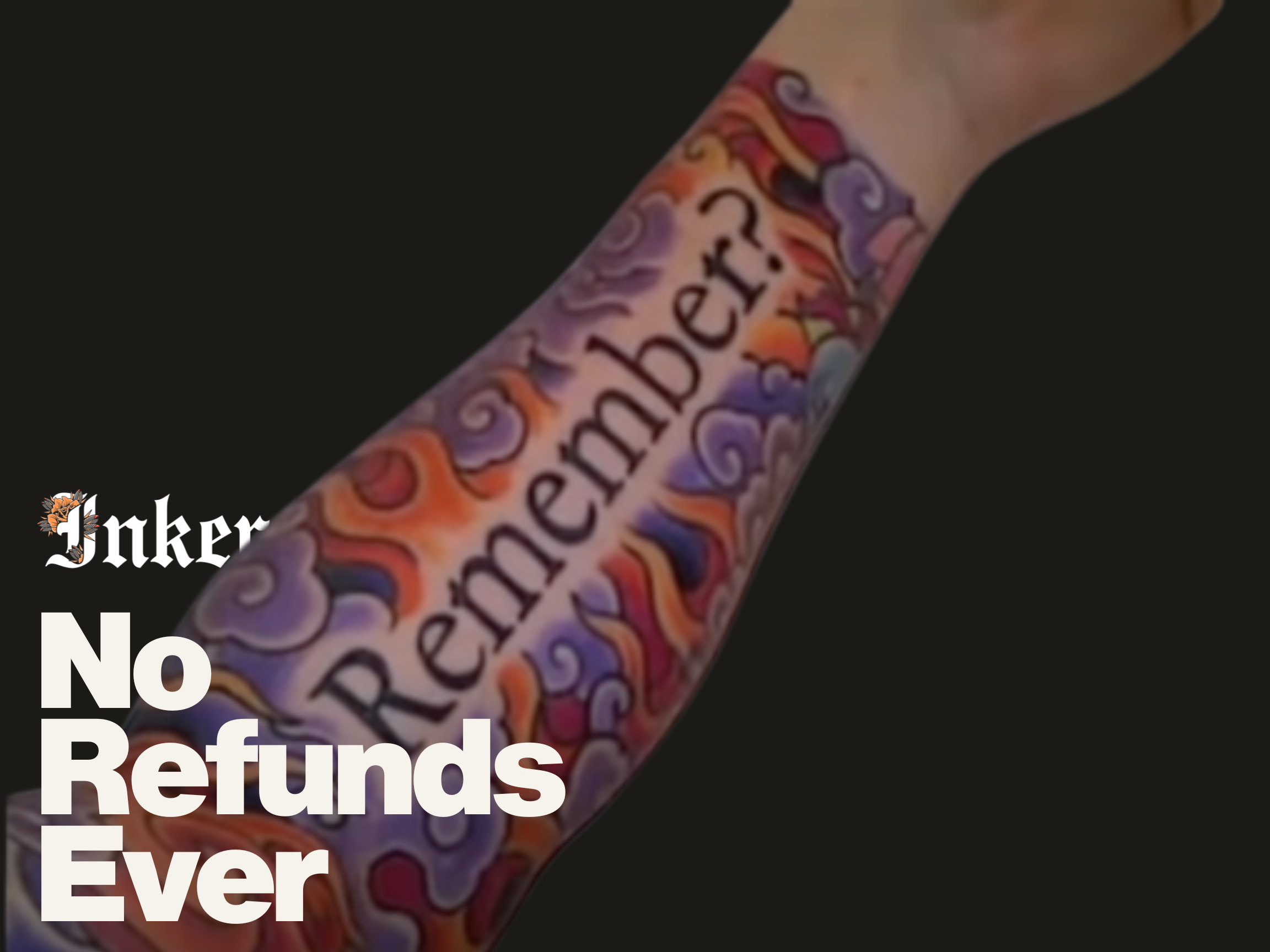
Another participant received “Larger.” The person was five feet one inch tall and seemed cool with having a legit reason to describe themselves that way. I don’t know whether Jackson appreciated the comedy she’d accidentally created, but that’s a pretty good return on a few letters of black ink.
There’s a participant with “has” who reported that people mistook it for initials. Her husband suggested adding “been.” I’m not sure if the man was trying to contribute to his wife’s literary career or work a little marital comedy into the arrangement, but she wasn’t interested in the suggestion. Another person received “haven’t,” put it on a foot, and enjoyed contradicting the word whenever they looked down.
The participants were doing things with Jackson’s language that she couldn’t have arranged in the original manuscript. The words were taking on personal meanings completely unrelated to the story, and a number of people seemed to be having a tremendous amount of fun with them.
I read about the participant who received “want.” According to the account published on Jackson’s project website, the word was placed below the panty line. The participant described flashing the tattoo to her husband instead of verbally announcing what she wanted, which worked out for their marriage. Two children were part of the story she shared afterward. So Jackson sat down to write a piece of experimental fiction and, without planning it, supplied a married couple with an efficient communication system.
There’s another participant carrying “undress,” a word with several possible interpretations depending on who’s reading it and how much clothing they happen to be wearing. The participant described discussing the word’s different meanings with her father, who initially thought there was only one. I can understand his confusion. If my daughter announced she’d been assigned “undress” by an unfamiliar writer and was considering having it tattooed, I’d probably want to see the entire application before commenting on its artistic significance.
The stories extend beyond jokes and awkward explanations. A participant with “walk,” reported that her fiancé received “The,” the first word of the next sentence, and the two chose matching placements on the backs of their necks. Their tattoos were adjacent in Jackson’s manuscript, which gave the couple a unique connection without requiring the conventional tats like matching hearts, initials, or declarations of eternal devotion. That’s a cool alternative to getting your girlfriend’s name tattooed only to discover six months later that she’s moved in with the guy who actually tattooed her.
Jackson’s experiment also attracted people who wanted to belong to something. In her 2018 interview, she discussed participants who felt they hadn’t accomplished much and saw the project as an opportunity to make a contribution. Others were fascinated by language, tattooing, or the idea of having an actual physical connection to strangers around the world.
The project attracted people for very different reasons, and Jackson wasn’t prepared for how personal those reasons would become. She’d developed an out there way to publish a manuscript, but the volunteers were bringing their own histories, insecurities, relationships, and occasional sexual arrangements into it. The author supplied the word. The person wearing it had an entire life available to reinterpret it.
In an interview with Scott Rettberg, Jackson described watching three participants help a fourth through a first tattoo. They were checking that the newcomer had eaten and making sure everything was going well. These were people who had met through an experimental writing project and were helping each other deal with the physical experience of getting tattooed. Jackson was no longer the only person creating relationships within the work.
This is also where the actual tattoo artists deserve some attention. Jackson provided the words and the rules, but an artist still had to execute the lettering on human skin. The participants could choose placement within certain limits, and the work was supposed to be done in black ink using a traditional book typeface. It sounds straightforward until you process the variables, the different bodies, locations, lettering sizes, and the aging those tattoos would have to endure.
One participant with the word “flayed.” wrote that the tattoo was becoming blurry after being done very small, something the tattoo artist had warned about. The participant was considering having a larger version tattooed over it. The author’s manuscript might have remained legible on her computer, but the version living on that particular person was having problems of its own.
That’s tattooing for you. A writer can decide exactly how a word should look on a page, but skin isn’t paper, and the artcist holding the tattoo machine is dealing with a material that moves, stretches, heals, and ages. The artists that were made privy to the project, might have found it fascinating, or maybe it was another afternoon spent putting a customer’s weird idea into permanent form. Either way, the artists had responsibilities that Jackson couldn’t handle with a word processor.
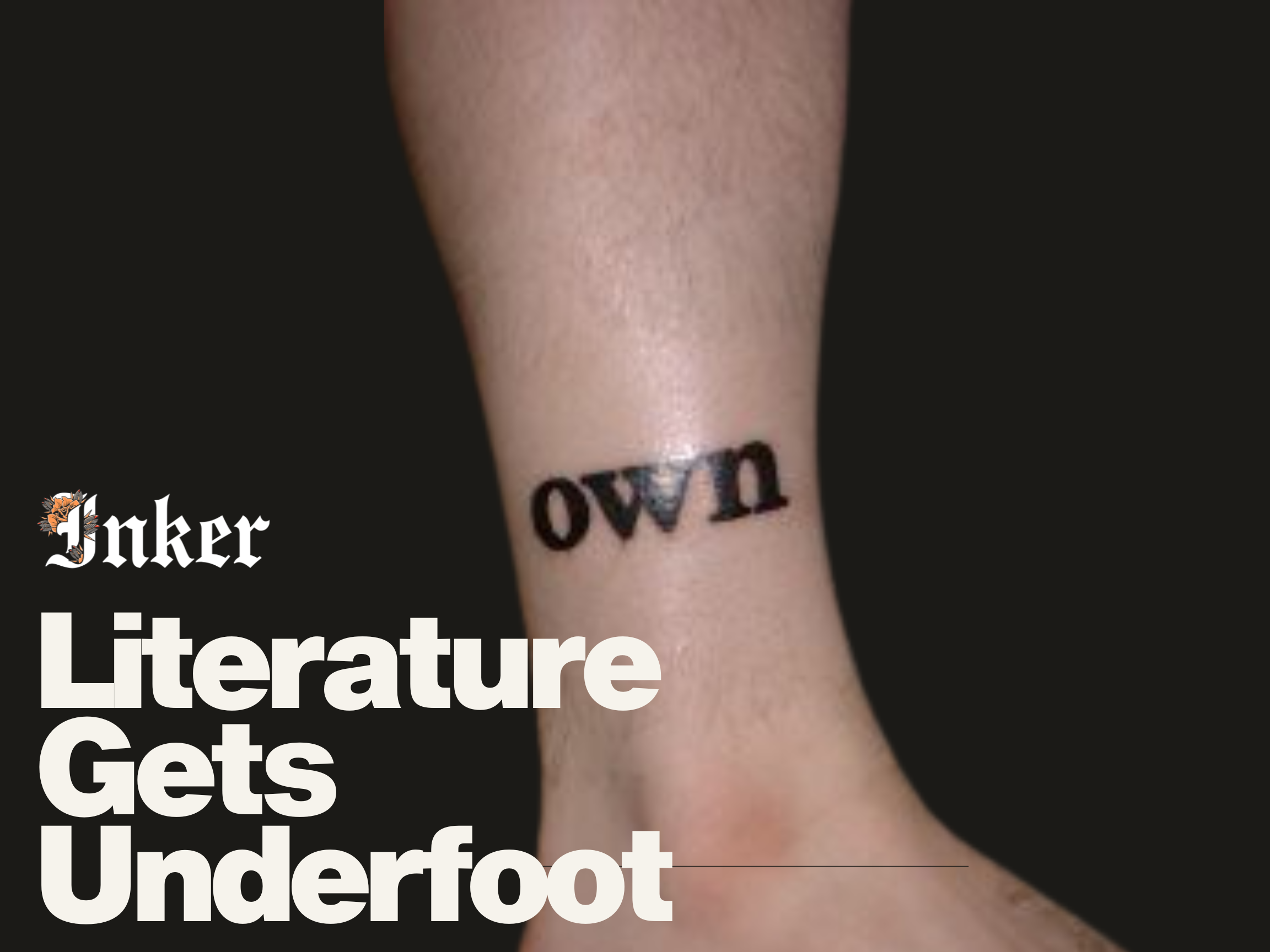
The project developed its own social world. Participants posted accounts of their tattoos, described conversations with strangers, and tried to connect with other Words. Jackson also created a video version in 2011 using clips of participants displaying and speaking their assigned words, assembling a separate story from the material people submitted. The original Skin manuscript remained unpublished for the general public.
Jackson even described receiving messages about her Words getting married. I don’t know if the wedding invitations identified the bride and groom by their actual names or their literary assignments, but can you imagine that seating chart. Put “and” between “husband” and “wife,” seat “divorce” near the bar, and make sure “regret” isn’t given access to the microphone.
For Inker, we’ve built a place where collectors can discover tattoo artists, see their portfolios, and connect with artists whose work fits what they’re looking for.
Jackson has created a strange relationship between a writer and her audience. Her Words are aging, getting married, having children, changing careers, and carrying around little pieces of fiction that may have acquired entirely new meanings since they first received them. Some of the tattoos have probably faded by now. Others may have been covered or removed. Their owners are free to tell whatever stories they want about them, even if those stories have nothing to do with the manuscript.
A project involving thousands of tattoos offers a lot of conversations, especially with artists who did the lettering and participants who’ve been wearing their assigned words for more than twenty years. I’d put those interviews ahead of another article explaining what “Skin” is supposed to symbolize.
J Gekko
Staff Writer, Inker