
THE MONSTERS HAVE NAMES
Oni Tattoos, Japanese Folklore, and What These Ancient Creatures Know About Modern Society
At a temple in Japan, people invite demons inside. This is VERY different from the usual, where everybody wants the evil spirits to get the fuck out. At Kinpusenji Temple in Nara Prefecture, the annual Setsubun ceremony includes an invitation for the country’s unwanted onis to come in. The tradition comes from the legend of two demons named Zenki and Goki, who were subdued and persuaded to change their ways by the religious figure En no Gyōja.
I’ve written about onis before, and they’re among my favorite subjects. The artwork is phenomenal, especially when a tattoo artist understands the traditional imagery and knows how to give the creature its own personality. But it’s not the horns, the enormous teeth, or the crazy expressions. It’s what these demons represent and how differently they’re portrayed throughout Japanese folklore.
Each has a history, a reputation, and circumstances that help explain the character. Some are violent, others are protectors. A few have stories that are sad, and the farther you get into their histories, the harder it becomes to put every oni into the same category.
Sounds a little like the people we deal with every day, doesn’t it?
The common representation of onis are usually depicted with horns, sharp teeth, wild hair, powerful limbs, and sometimes an iron club known as a kanabō. Red and blue are common skin colors, but traditional artwork includes variations. Japanese folklore has been developing them through religion, literature, theater, and local traditions. Some bring disease and destruction, while others protect communities or serve religious purposes. There are even oni associated with blessings. Their appearance gives an artist tremendous freedom, but their individual histories are the core.
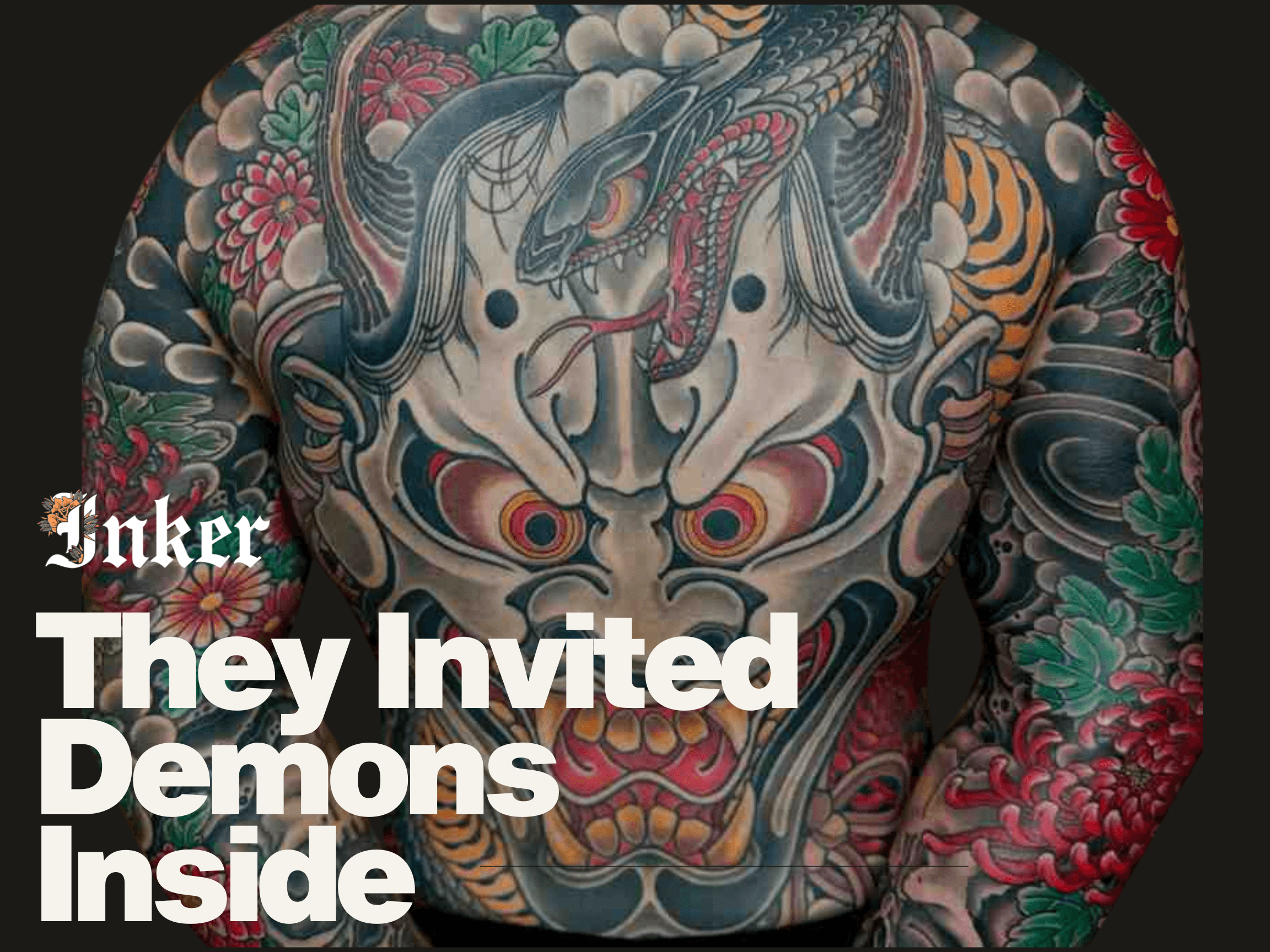
Shuten-dōji, one of the most notorious oni in Japanese legend. His name is associated with drinking sake, and traditional accounts portray him as a powerful demon leader living on Mount Ōe, surrounded by followers, enjoying elaborate feasts, and abducting people from the capital. Depending on the version, his appearance can include red skin, additional eyes, multiple horns, and an enormous body. Shuten-dōji was a dangerous fucker, and the people in the story had enough.
So, one day, there’s this samurai named Minamoto no Yorimitsu, also known as Raikō, who rounds up his posse, and they enter the demon’s crib disguised as religious travelers. They earn the demon’s trust, give him roofied sake that knocks him out, and they cut off his head to kill him.
But wait there’s more……...Shuten-dōji’s severed head continues fighting, attacking Raikō even after being separated from his body. Imagine the visual on that, lol!
For an artist, that’s inspired by a great story, it combines rage, elaborate armor, flowing hair, and the grotesque expression of a demon refusing to accept defeat. I’m not an artist but shit like this motivates me to start drawing!
Now, humor me a little, and hear me out on this. Some people do terrible things, and the damage they cause doesn’t disappear after hearing their childhood stories.
Shuten-dōji’s legend demonstrates how much of a person’s reputation gets built around power, fear, loyalty, and the way their enemies describe them. An oni can be guilty of horrific acts and still possess intelligence, influence, and a personality. Understanding a character doesn’t require excusing his behavior. The same ought to apply to people, right?!
Then there’s Ibaraki-dōji, and this demon presents a different character altogether. He seems to always be portrayed as one of Shuten-dōji’s most formidable associates. In this tale, Ibaraki has an encounter with a weekend warrior samurai Watanabe no Tsuna, who cuts off the his arm. Tsuna takes the severed limb home, but Ibaraki isn’t having it. No way is he going to let a two-bit weekend warrior samurai keep a piece of his anatomy as a trophy.
In one version of the story, the oni disguises himself as Tsuna’s aunt, gains access to the house and get his arm back. The depictions vary across the centuries, including differences in appearance and even gender. I had to go back and forth cross referencing to make sure I was keeping track of the right oni. That gives you an idea of how complicated these characters become once you get beyond a tattoo flash sheet.
But, think about that episode, tale, story, yarn, whatever you want to call it……... Some weekend warrior samurai cuts off an oni’s arm, takes it home, and considers the matter settled and he feels like a badass glowing with BDE! Then, that oni goes to his crib dressed like his aunt and walks away with his missing limb. So much for bragging rights. Your trophy is gone and you have no proof! Your samurai buddies treat your story like you’re the guy with the big fish that got away story, lol.
I am of the opinion that Ibaraki raises a question about identity. If the frightening appearance disappears beneath a familiar face, how much of our trust depends on what we think we’re looking at? People do this constantly. A dolled-up appearance, an impressive title, a charming personality, or a polished public reputation can make us comfortable long before we understand the person underneath.
In Ibaraki’s case, the disguise is deliberate deception. In ordinary life, appearances can conceal anything from dishonesty to insecurity. I’d say more weight on insecurity.
There are so many oni stories that I’d like to share, but I need to stick with the flow of this article, and with that said, I’m going to share the Hannya mask. Technically, Hannya isn’t the personal name of a single oni wandering around Japan getting into trouble. It’s a traditional Noh theater mask depicting a woman transformed into a demon through overwhelming jealousy, resentment, or rage. The horns, metallic eyes, sharp teeth, and distorted expression are immediately recognizable, but there’s something different about the face. Depending on how the mask is viewed, the expression can convey suffering as well as anger. Japanese theater managed to put both emotions into a piece of carved wood, and tattoo artists have been working with that same visual contradiction.
The interest I have with Hannya is the associated transformation with a woman’s destructive emotions. Those stories reflect historical attitudes toward women and their anger. This makes you think about the symbolism instead of writing it off as the usual explanation that the mask represents jealousy. That’s too narrow and elementary. Let’s open up our minds……. People have a talent for deciding which emotions are acceptable and which ones make a person dangerous. For example, a man loses his temper and gets described as passionate. A woman expresses anger and can find herself being characterized very differently. It makes me curious about the collectors choosing these masks and whether they’re drawn to the anger, the suffering, or the combination of both.
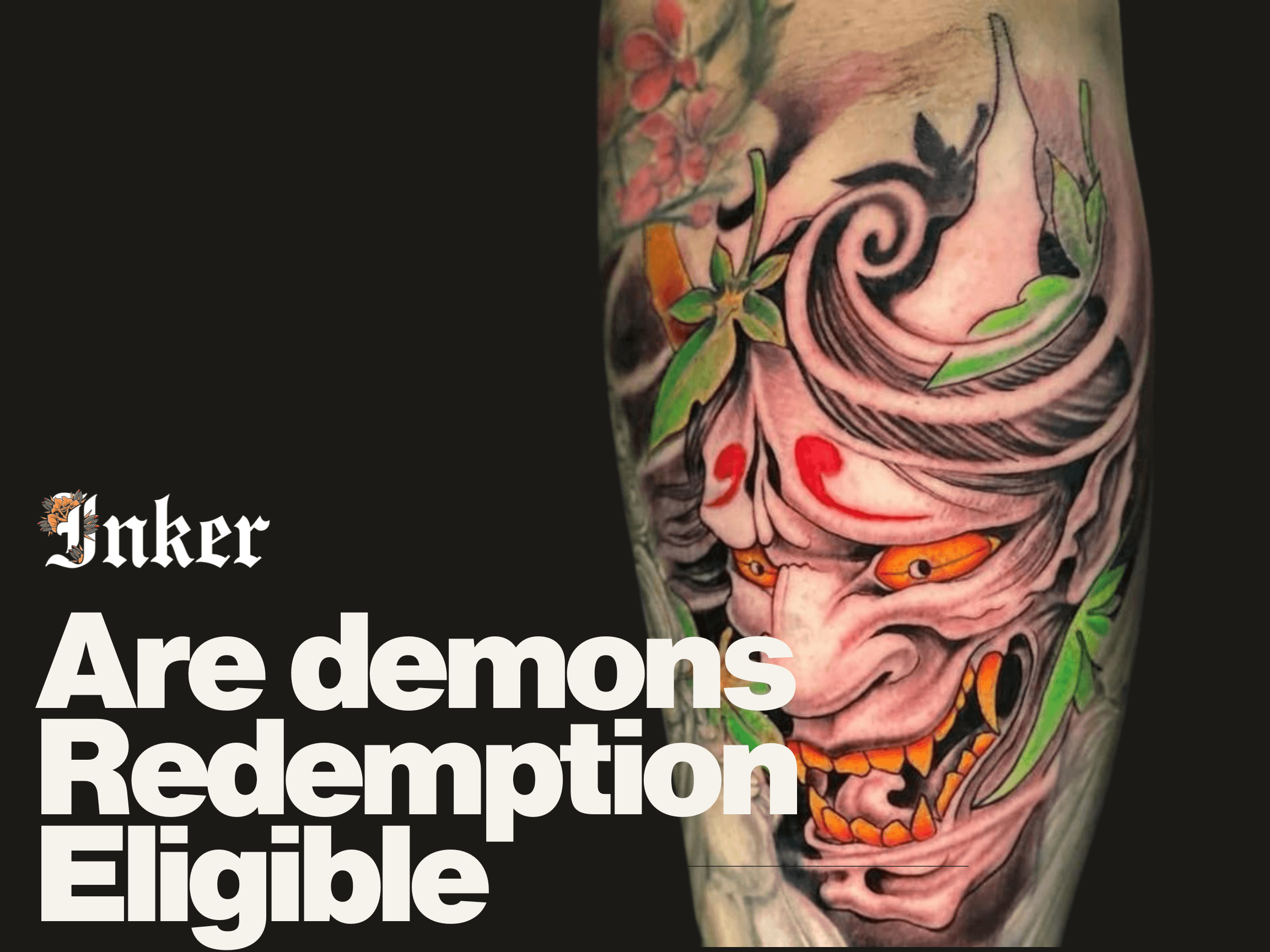
Now, opposite of the onis we’ve been discussing, in The Red Oni Who Cried, written by Hirosuke Hamada in the twentieth century, a kind red oni wants to befriend human beings, but the villagers are frightened of him. His blue oni friend devises a scheme to make the red oni appear heroic. The blue oni pretends to attack the villagers, giving the red oni the opportunity to rescue them. The plan succeeds, but the blue oni sacrifices his own reputation and ultimately leaves his friend behind.
The red oni finally gets the acceptance he’s been seeking, and the blue oni gives up something precious to make it happen. It reminds me how much effort people put into being accepted by groups that have already decided they don’t belong. The red oni wants friendship, but his appearance scares the villagers. The blue oni understands their prejudice well enough to exploit it. The entire scheme works by giving people the villain they expect and the hero they’re prepared to applaud. The sad part is that the villagers are pleased with their new friend, unaware that the oni they consider dangerous made their friendship possible.
Shuten-dōji’s terrifying power, Ibaraki-dōji’s cunning, the anguish represented by Hannya, and the friendship between the red and blue oni offer very different personalities. Two collectors can choose imagery associated with onis and express different interests. I would rather ask a collector what attracted them to a specific one than announce what their tattoo supposedly reveals about their personality.
Artists out there working with onis also have an opportunity to do more than reproduce a mask. The expression, pose, color, and surrounding background imagery can draw from a certain legend or create an original interpretation. Traditional Japanese woodblock prints have influenced tattooing for generations, and the surviving artworks provide an extraordinary visual reference. A collector interested in this kind of work can explore portfolios on Inker, especially artists experienced in Japanese traditional tattooing, illustrative work, and larger compositions where the character has room to develop.
Remember Zenki and Goki, the two demons from the beginning? Their story is connected to a religious tradition that treats transformation as possible. At Kinpusenji, the Setsubun chant doesn’t demand demons to leave, the temple welcomes them, with the intention of changing their destructive nature. There’s distance between that tradition and Shuten-dōji’s bloody adventures, but both belong to the complicated world of oni folklore.
I like that the old stories don’t insist every oni deserves the same treatment. A dangerous one might have to be confronted while another might be given a chance if it’s capable of changing.
This won’t be the last time I write about onis, so expect some more articles on this subject.
Artists that take the time to research the stories, descriptions, and interpretations, before you do an oni piece, I appreciate you!
J Gekko
Staff Writer, Inker